Immigration Legislation

Counting the Votes on Immigration Reform in the House
For most people who follow the immigration debate, it is an issue which at its core is about values like fairness, faith, and family. Those who support immigrants’ rights and want to see our immigration system reformed follow the ins and outs of the debate via nightly news, daily media clips, or blogs like this one. Read More

Forging Consensus on Visa Program Critical to Crafting Effective Policy
A proposal being considered in the House revives the debate around the number of visas that would be allocated to less skilled workers, also known as “W” visas. In particular, Representatives Ted Poe of Texas and Raul Labrador of Idaho are working on an immigration bill that could double the number of visas of less skilled workers that the Senate settled on. Although the increased number could help address the labor shortage in some industries, this proposal would potentially cause a fracture in the consensus achieved between business and labor leaders who negotiated the levels that were included in S. 744. Ultimately, what is critical to success of a program depends on having the right players at the table ensuring both private and public interests are protected. Read More

Courts Continue to Reject Arizona Style Laws, Even as House Embraces SAFE Act
Last year, in Arizona v. United States, the Supreme Court reaffirmed that the federal government, rather than the states, has both the responsibility and the authority to enforce immigration law. Leaving immigration enforcement to the whims of individual state legislatures and law enforcement officers was, according to the Court, likely to undermine the federal framework and interfere with U.S. foreign relations. Despite this resounding rejection of state immigration enforcement, or perhaps because of it, the House Immigration Subcommittee passed the Strengthen and Fortify Enforcement (SAFE) Act (H.R. 2278), which attempts to make an end run around the Supreme Court’s decision by empowering states and localities to enforce immigration law as they see fit. At the very time the country is pushing for a comprehensive federal overhaul of the immigration system, the presence of the SAFE Act threatens to cripple the success of those efforts. Read More

Pressure Mounts on House To Tackle Immigration Reform
As July comes to a close and August recess begins, prospects for immigration reform in the House of Representatives are looking up. While some saw the pronouncements from House Judiciary Chairman Bob Goodlatte (R-VA) and Speaker John Boehner (R-OH) that the House would not take up the Senate bill as a death knell, it looked more like a bargaining position by the end of the month. “We’re doing it differently in the House,” Goodlatte told Fox Business. Members are still divided about what immigration measure they should consider. Options range from several piecemeal bills—possibly including a limited version of the DREAM Act that House Majority Leader Eric Cantor (R-VA) is crafting with Goodlatte—or a comprehensive measure on which seven members are still working. So while the House is not going to meet Boehner’s original goal of passing some form of immigration reform by the end of July, the issue is far from dead. Read More
Why Citizenship Matters in Immigration Reform
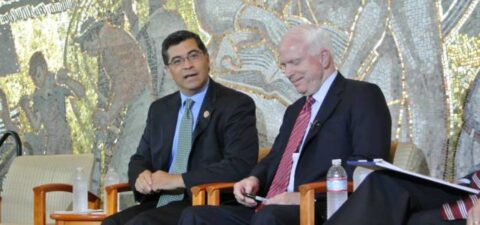
As the August recess approaches, the debate surrounding immigration reform and citizenship will shift away from Washington and into town hall meetings and events in local communities. In anticipation of this, today the AFL-CIO hosted an event on citizenship featuring among others, Senator John McCain (R-AZ) and Representative Xavier Becerra (D-CA). Both men emphasized the importance of recess town halls as opportunities for lawmakers to discuss immigration reform with their constituents. Sen. McCain said he plans to tour Arizona over the recess and take the pulse of his constituents. Both McCain and Becerra were optimistic however. McCain emphasized the broad public support for the pathway to citizenship, sharing polls that show that well over 70% of the American people think immigration is good for our Country and Rep. Becerra reiterated the need for full citizenship by saying “I don’t think this country is ready to go back to the 20th or 19th century where we have a second class of citizens.” Read More

How States And Local Economies Benefit From Immigrants
Detroit usurped Jefferson County, Alabama’s place last week as the largest municipality in the United States ever to file for bankruptcy. And as signs increasingly pointed toward the city’s financial issues, local leaders in Southeast Michigan have been exploring ways in which to stabilize or strengthen Detroit’s economy. One way to do that is to encourage more immigrants to settle there. New restaurants, shops, and residents already have helped to revitalize one area in Southwest Detroit called Mexicantown. And there is no doubt that immigrant entrepreneurs and innovators play an important role throughout Michigan as well. Immigrant entrepreneurs create jobs, bring in additional revenue, and contribute significantly to the state’s economy. Highly skilled immigrants are vital to the state’s innovation activities, spurring further growth. As such, local leaders and advocates recognize the importance of immigrants in their communities and support immigration through local “welcoming” and integration initiatives. Read More

Steve King’s Tall Tales About Immigrants and Crime Don’t Add Up
There is no denying that Rep. Steve King (R-IA) has a vivid imagination. As he sits in Border Patrol vehicles at night, he apparently sees hundreds of DREAM Act-eligible drug mules with muscular calves hauling heavy loads of marijuana across the border. How does he know these drug mules would meet the rather stringent criteria for legalization under the DREAM Act? Hard to say. How does he know these drug mules outnumber their valedictorian counterparts by a ratio of one hundred to one? No one can say. What is certain is this: when it comes to the topic of immigration and crime, nativists like King have no need for facts when there is so much fear and innuendo at their disposal. Perhaps this is because the facts are so stacked against them. Read More

Hearing Highlights Similarities Between Senate Immigration Bill and House Border Bill
Ostensibly, the July 23rd hearing of the House Homeland Security Subcommittee on Border and Maritime Security was about the many differences between the Senate’s immigration-reform bill and the House’s border-enforcement bill. The hearing was even titled “A Study in Contrasts: House and Senate Approaches to Border Security.” However, while highlighting very real differences between the House and Senate approaches to immigration reform, the hearing inadvertently shed light on the many similarities between the two when it comes to border security. Both pieces of legislation embrace possibly unworkable border-enforcement goals that have more to do with unauthorized immigration than with the primary threats to border security: the transnational “cartels” that smuggle people, drugs, guns, and money in both directions across the border. Read More

Opposition Builds To Limited Proposal That Would Offer Citizenship Only To DREAMers
So far, House leaders have considered providing an opportunity for citizenship only to undocumented immigrants who arrived in the U.S. as children, often known as DREAMers. Majority Leader Eric Cantor (R-VA) and Judiciary Committee chairman Bob Goodlatte (R-VA) confirmed earlier this month that they are working on a bill, called the KIDS Act, to create a road to citizenship for some DREAMers. "These children came here through no fault of their own and many of them know no other home than the United States,” Goodlatte said in a statement. Read More

Immigration Reform an Imperative for Cities and Metropolitan Areas
Metropolitan leaders from around the country made the case for immigration reform at an event hosted by the Brookings Institution’s Metropolitan Policy Program today. Over 80 percent of the U.S. population, including 95 percent of immigrants, now live in metropolitan areas; cities and towns across the country therefore have a huge stake in passing immigration reform. In fact, panelists agreed that comprehensive immigration reform is an imperative for metropolitan areas. “We need an immigration system that is keeping with the times,” stated Audrey Singer, a Senior Fellow with Brookings. Read More
All gifts are matched dollar for dollar
No one should face the immigration system alone