Due Process and the Courts
What does the constitution say about due process?
The Fifth Amendment to the Constitution says clearly that no person shall be deprived of life, liberty, or property without the due process of law. Note that this says person, not citizen, and over the years the Supreme Court has consistently ruled that the Due Process Clause applies to all people in the United States.Do non-citizens have the right to due process in the U.S.?
Yes. The Constitution guarantees due process rights to all "persons," not just citizens. This means non-citizens, including undocumented immigrants, are entitled to fair treatment under the law. This includes the right to defend themselves in court. But recent Trump administration policies that speed up deportations and limit access to legal representation make it harder for non-citizens to get their fair day in court.- Access to legal representation Access to legal counsel is an essential part of our justice system and our democracy. In the criminal justice system, anyone facing even one day in jail gets a lawyer if they can't afford one. But immigrants facing deportation usually don't get that chance.The research is clear – the most effective way to ensure some level of due process for people navigating our complicated immigration system is for them to have trained attorney at their side. But Trump administration is now working to strip attorneys from as many people as possible, all in the name of increasing its deportation numbers. This attempt to eliminate basic due process will hurt people who already have few options.
- Fair day in court Due process guarantees that individuals have the opportunity to defend themselves in court. This includes non-citizens facing deportation.
Why is due process important?
We are seeing right now the importance of due process when it comes to President Trump's actions to carry out the so-called Alien Enemies Act, a 1798 wartime law that permits people to be deported outside of the normal framework of immigration law. President Trump has alleged that this law allows him to simply point at any person, declare them to be an alien enemy, and kick them out of the country without ever having a chance to see a judge. Thankfully, the Supreme Court said that is not true, and in a unanimous decision, ruled that people can challenge the Trump administration's invocation of the Alien Enemies Act. That is why due process is so important, because it means that no person can be rounded up and sent to another country without a chance to go to court and make the government prove their case.How is the American Immigration Council working to protect due process?
- We serve thousands of individuals in immigration detention centers through the Immigration Justice Campaign, our initiative with the American Immigration Lawyers Association. The Justice Campaign provides free legal services for immigrants who would otherwise have to navigate our complicated immigration system without a lawyer.
- We use the courts to demand a fair process for immigrants. Our litigation team is fighting back against the Trump administration’s blatant disregard for due process including filing a lawsuit challenging their illegal detention of immigrants in El Salvador’s notorious Terrorism Confinement Center (CECOT).
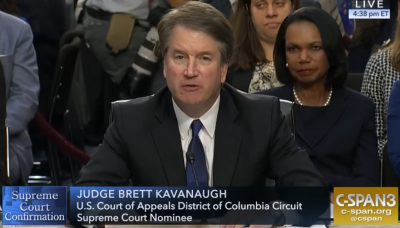
Brett Kavanaugh’s Record on Immigration Raises Questions
President Trump’s nominee to replace Justice Anthony Kennedy on the Supreme Court—D.C. Circuit Judge Brett Kavanaugh—appears in front of the Senate Judiciary Committee this week to answer questions about his judicial record and temperament. During multiple days of hearings, senators are expected to ask him about his position on everything… Read More

Federal Judge Allows DACA Renewals to Continue for Now
This week will mark the one-year anniversary of President Trump’s announcement ending the Deferred Action for Childhood Arrivals (DACA) initiative. Yet, defenders and recipients of DACA are celebrating a decision that came late last week, in which several states attempting to end the initiative were hit with a major… Read More

Sessions’ Decision Places New Burdens on Individuals in Removal Proceedings and Immigration Judges
Attorney General Jeff Sessions issued a decision on continuances in immigration court that both recognized their importance and decried their alleged overuse. This decision will have widespread implications for immigration court process. The case, Matter of L-A-B-R-, addresses circumstances under which an immigration judge can continue a case so a… Read More

Immigration Judges’ Union Fights for Judicial Independence
The National Association of Immigration Judges (NAIJ), the union that represents the nation’s immigration judges, is challenging the government’s decision to remove an immigration judge from a well-known case and replace him with a judge who immediately ordered the immigrant in the case deported. NAIJ’s grievance… Read More

15 Years of Government Data Reveals that Jailing Families in Detention Obstructs a Fair Court Process
As government officials and policymakers weigh the potential expansion of family detention, this report reveals how detention impacts asylum-seeking families and their claims for protection. Read More

DHS to Restart Deportation Cases for Hundreds of Thousands of Immigrants
Recently released internal communications at Immigration and Customs Enforcement (ICE) reveal a plan to restart the deportation cases of hundreds of thousands of people whose cases are currently administratively closed. This initiative has the potential to swell the immigration court backlog (currently at 730,000 cases) to… Read More

Immigration Judges Are Rejecting More Asylum Requests Under the Trump Administration
The Trump administration is working hard to undermine the asylum system through additional and unnecessary barriers, making it more difficult for those seeking refuge in the United States to be granted asylum. This is an ominous trend given that the U.S. government’s decision to either grant… Read More

Judge Orders A Full Restart of DACA, but Its Future Remains Uncertain
A federal judge on Friday ordered the Trump administration to restart the Deferred Action for Childhood Arrivals (DACA) initiative by August 23. This ruling in the D.C. District Court comes just days ahead of another hearing before a hardline conservative federal judge in Texas, where seven states have challenged the… Read More

Federal Audit Outlines Lasting Impacts of Trump’s Executive Orders on Immigration
President Trump wasted no time after assuming office in signing three executive orders which fundamentally changed the nature of immigration enforcement in the United States: Border Security and Immigration Enforcement Improvements; Enhancing Public Safety in the Interior of the United States; and Protecting the Nation from Foreign Terrorist Entry into the United States (commonly known as the “Muslim ban"). Read More

USCIS Is Slowly Being Morphed Into an Immigration Enforcement Agency
U.S. Citizenship and Immigration Services (USCIS) issued new guidance to initiate deportation proceedings for thousands of applicants denied for any immigration benefit. This policy change will have far-reaching implications for many of those interacting with the agency, but also signals a major shift in how USCIS operates. USCIS was never… Read More
Your support moves the American story toward justice, dignity, and belonging.
America's story is an immigrant story.